


Scaling a Trauma Psychotherapy Practice. 25% Higher Daytime Utilization in 90 Days.
Scaled a trauma therapy practice through recovery-centered branding and AI agents that streamlined administrative workflows.

The Challenge
- Clarity: Explaining trauma care in language prospective clients understand.
- Booking: Turning calls and online inquiries into booked sessions.
- Capacity: Filling underused daytime and virtual appointments while protecting clinician capacity.
- Continuity: Telling clients on a break apart from those who stopped treatment.
The Solution
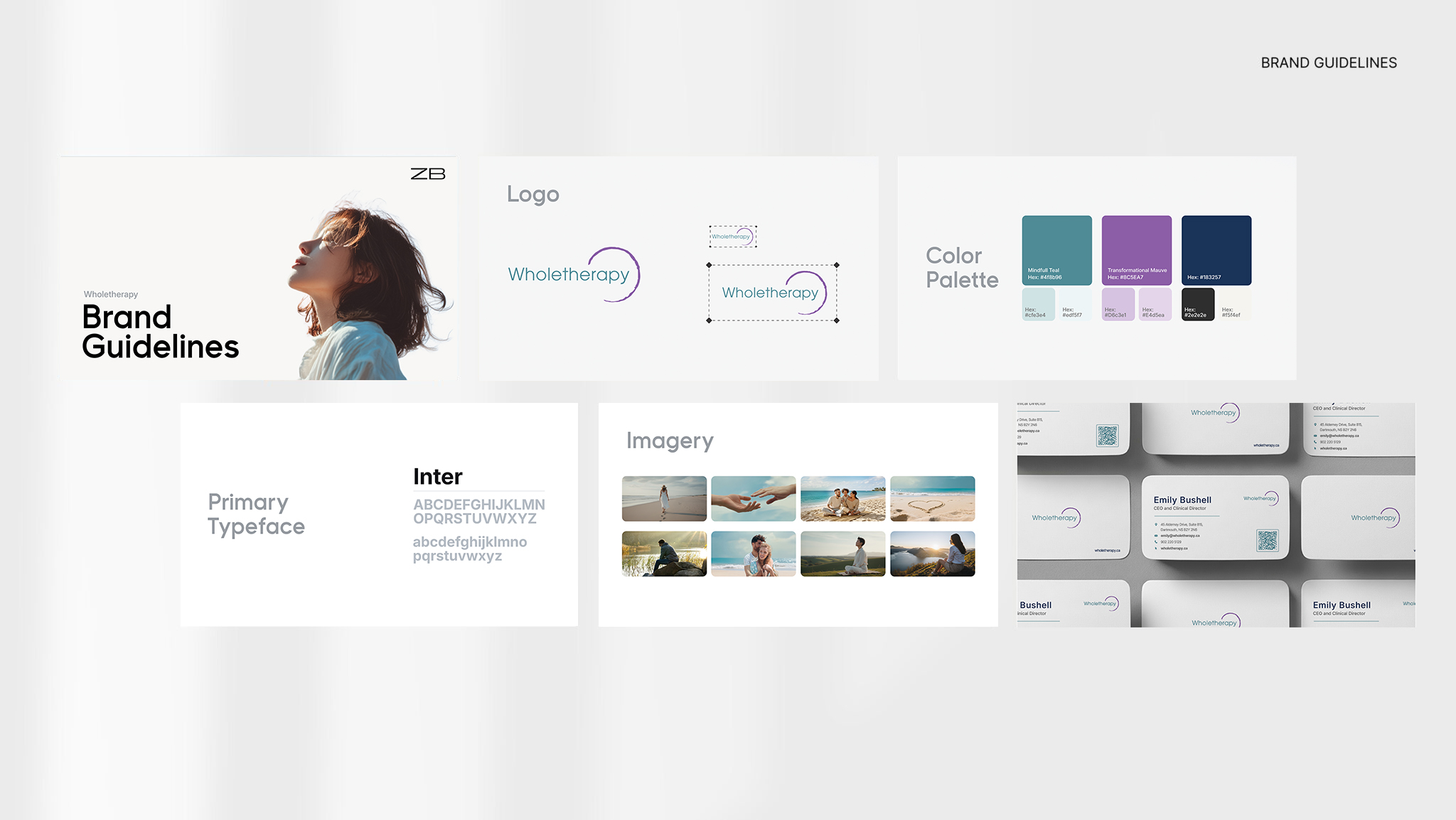
A Brand Built Around How Recovery Unfolds
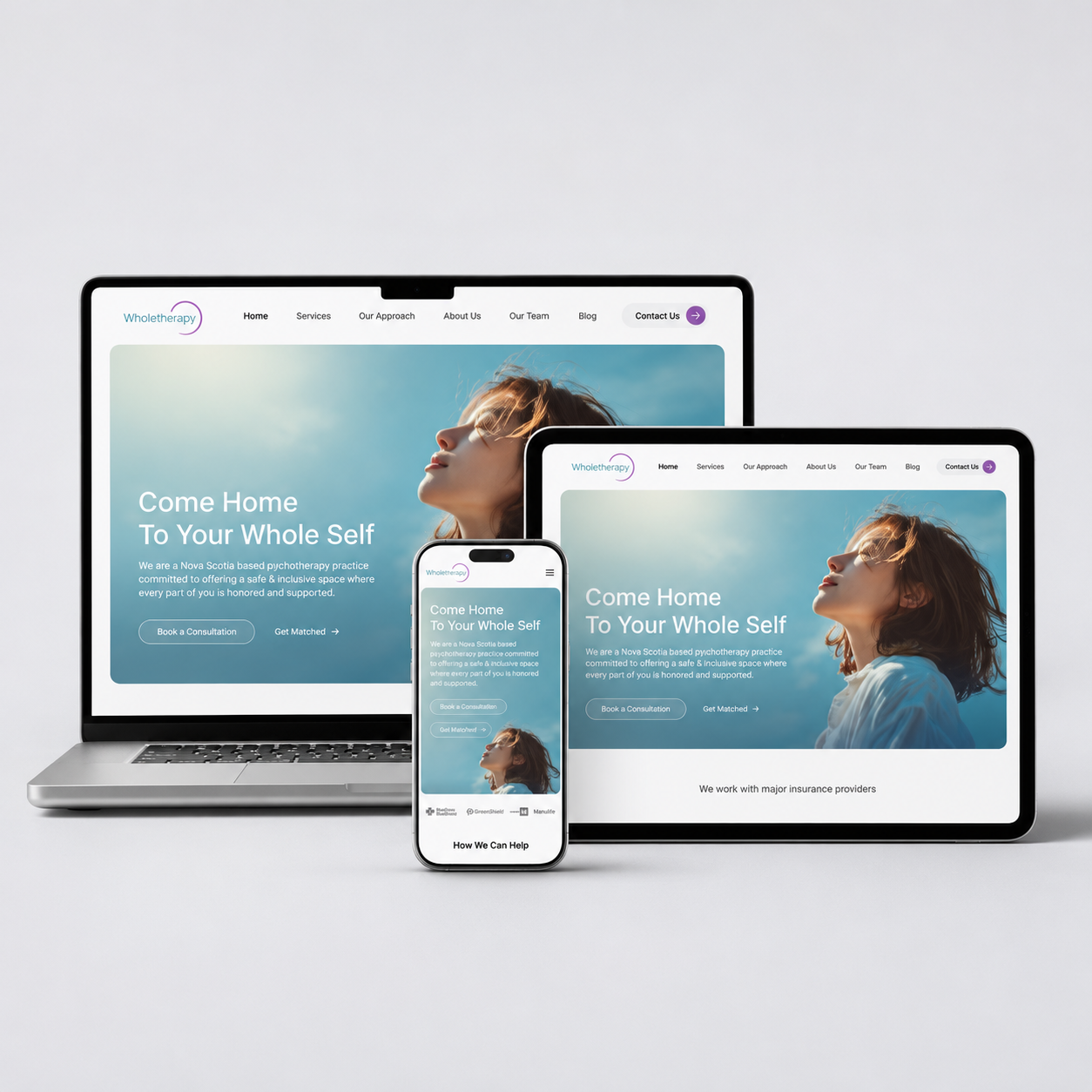
Trauma recovery rarely moves in a straight line. Clients often pause and come back, so I built the brand around that pattern. The “Come Home to Your Whole Self” campaign showed clients that stepping away and returning is part of healing.
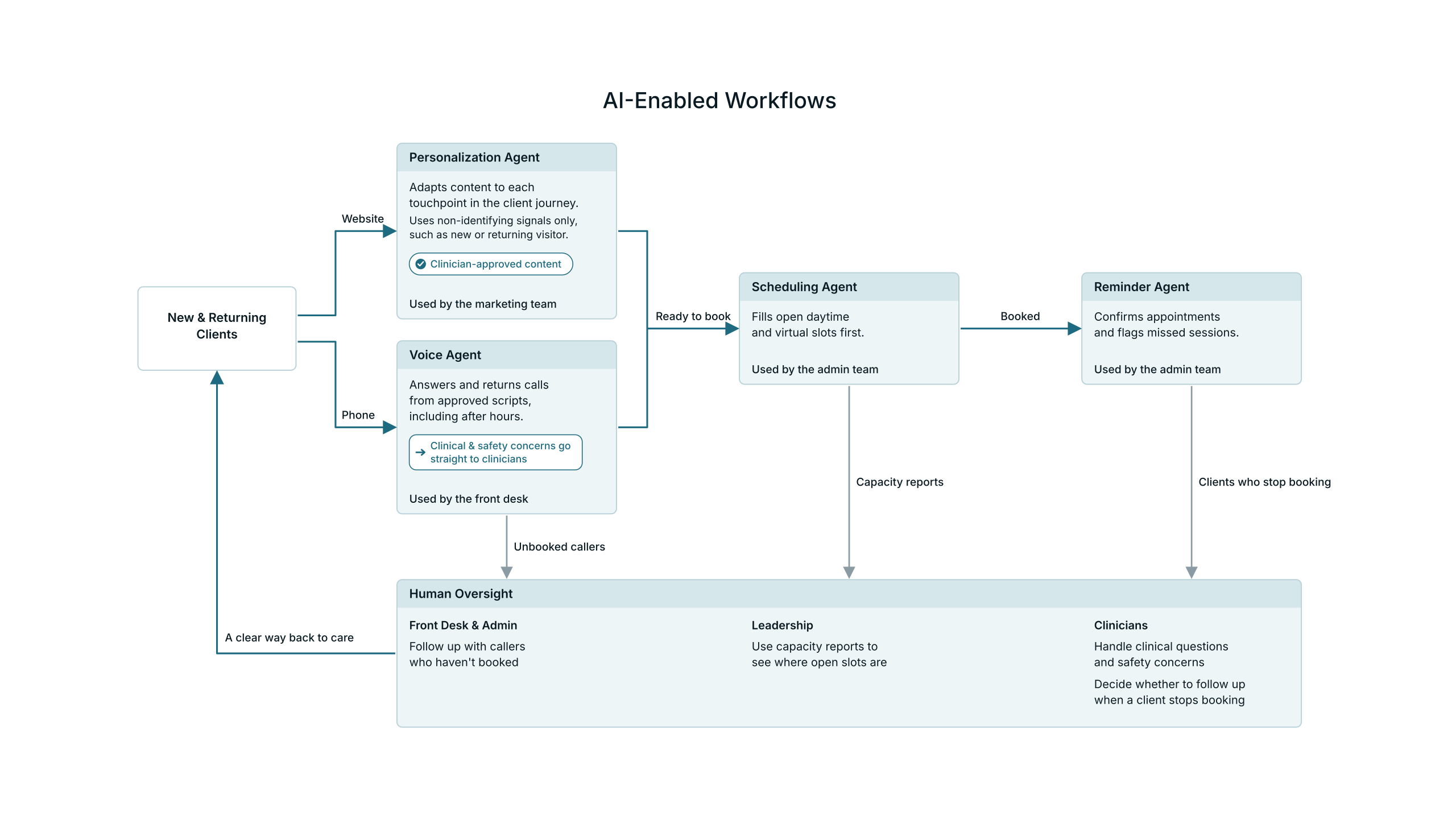
The website carried that message as the practice's digital front door. New and returning clients could see exactly where to start. Calm visuals and plain, warm language made that first step feel less intimidating. To personalize the client experience, the team used a personalization agent to adapt content to each touchpoint across the client journey.

Turning Inquiries into Booked Appointments
An optimized website only helps if someone answers. Missed calls were costing the practice clients. One after-hours caller never got through, even though a clinician had several open virtual slots that same week.
To close that gap, the front desk began using a voice agent to answer and return calls from approved scripts. The agent handled after-hours calls the same night. Staff then followed up with anyone who still had not booked, while clinical questions and safety concerns went straight to clinicians.
Once clients were ready to book, the admin team used a scheduling agent to fill open daytime and virtual slots first. Capacity reports showed leadership where the open slots were, so the practice could grow and serve clients with the clinicians it already had.
Designing for the Pause
Getting clients in the door was only half the work. In trauma treatment, a pause does not always mean a client has left. Clients most often slipped away at two points: when they stopped booking, and when they were ready to return to care. Losing a client at either point costs the practice revenue and can stall growth.
To capture those moments, the admin team used a reminder agent to confirm appointments and flag missed sessions. When a client stopped booking altogether, clinicians decided whether to follow up.
Planning for the pause turned breaks into returns. Every client who stepped away now had a clear way back, which helped the practice grow.

Explore more projects






Let’s shape what comes next.
Whether you are bringing a healthcare innovation to market, accelerating commercial growth, or putting AI to work, let’s discuss what it takes to move your business forward.